Support at Home Program
MiCare is an approved and trusted provider of Australian Government Support at Home program.
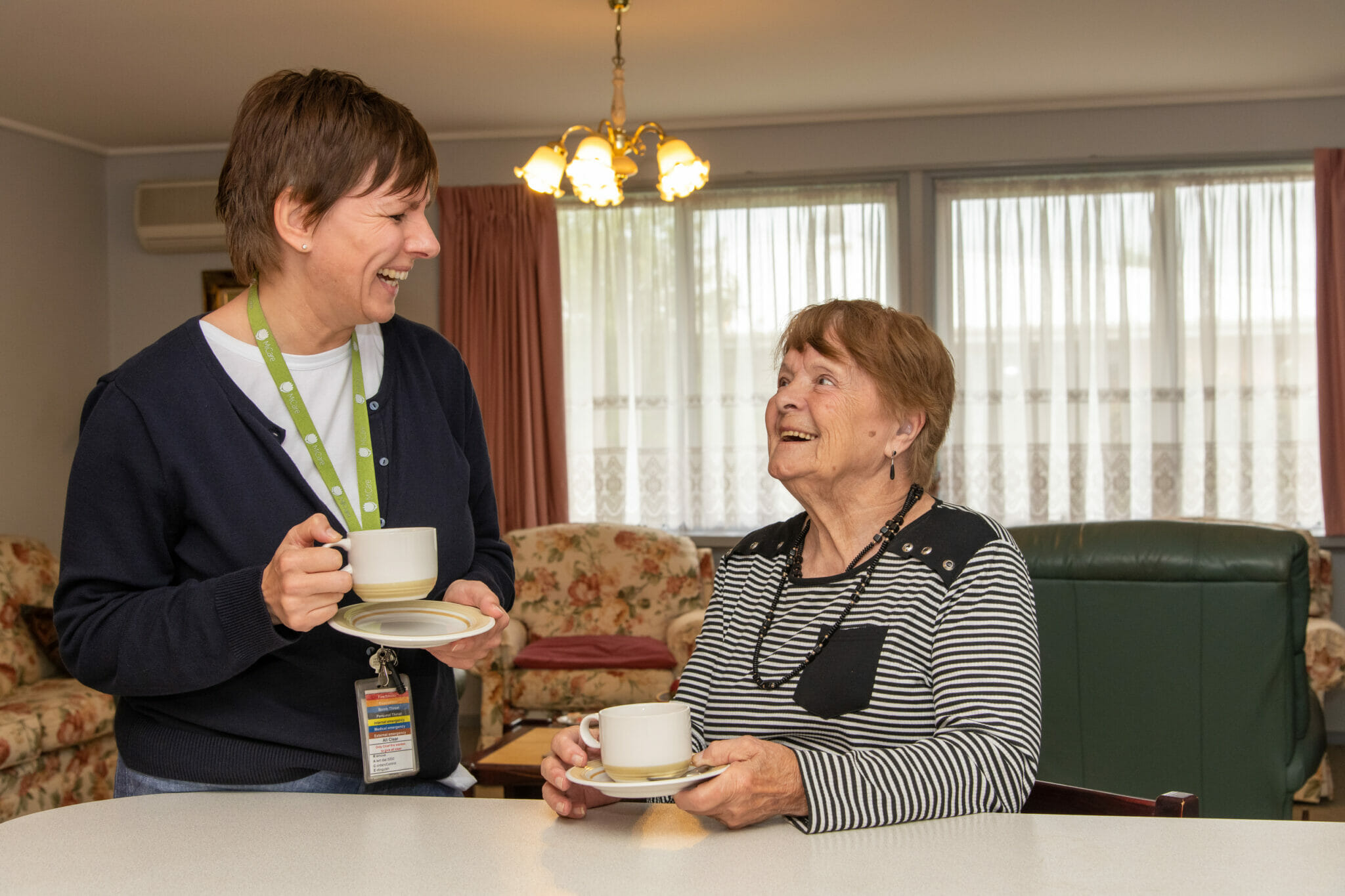
Your Support at Home Program.
Every Support at Home provider is different. Our personalised Support at Home program includes high-quality services that help you to remain living as you want to. We also provide dedicated support so that you can get the most out of your Support at Home funding .
-
What is Support at Home?
If you are over 65, you may be eligible for a government-funded Support at Home package. Support at Home enables older adults to remain living at home by funding services that support their independence, safety, and wellbeing. Most people prefer to access the Support at Home program instead of going into a nursing home, as they feel happier in the comfort of their own home, as part of their local community.
-
How does Support at Home program work?
In order to access a Support at Home program, you must first be assessed by My Aged Care.
- Initial Referral: You or your registered Supporter can contact the My Aged Care website or call their contact centre on 1800 200 422 to make an initial referral for assessment.
- Care Assessment: A trained assessor will talk to you—either at home or over the phone—to get a clear picture of your current situation and your needs, health, and mobility, so they can recommend the support and services that might suit you. You can choose to have a family member, friend, carer or registered supporter with you during your assessment.
- Determine Support Level: Depending on your assessment, you may be assigned one of 8 Support at Home funding levels. The amount of funding allocated to you depends on how much help you need.
- Service Planning: After you’ve been assigned a support level, the assessor will work with you to develop a Support Plan that fits your specific needs, goals, and preferences. You will be asked to choose a Provider to deliver services for you at home, such as personal care or cleaning. The Support at Home program can contribute to the cost of your services.
-
Support at Home Package Levels
There are eight funding levels, ranging from $11,000 to $78,000 per year.
The approximate budgets are:
- Level 1 is $2,680 per quarter (or $10,700 annual budget)
- Level 2 is $4,000 per quarter (or $16,000 annual budget)
- Level 3 is $5,500 per quarter (or $21,950 annual budget)
- Level 4 is $7,400 per quarter (or $29,700 annual budget)
- Level 5 is $9,900 per quarter (or $39,700 annual budget)
- Level 6 is $12,000 per quarter (or $48,000 annual budget)
- Level 7 is $14,500 per quarter (or $58,150 annual budget)
- Level 8 is $19,500 per quarter (or $78,100 annual budget)
Quarterly budgets are released at the beginning of each quarter (July, October, January, April) and providers claim against this budget for services you receive during that quarter.
The package will fund the following types of services:
Clinical Care:
Specialised services to maintain or regain functional and/or cognitive capabilities e.g. Nursing, most allied health, nutrition, care management and restorative care managementIndependence:
Support to manage your personal care, social support or transport to keep you moving independently e.g. Personal care, social support and community engagement, respite, and transport.Everyday Living:
Support to look after your home and maintain your independence at home e.g. Domestic assistance, shopping assistance, home maintenance (including light gardening) & home repairs, meals (preparation and delivery)
Benefits of Support at Home Programs at MiCare
-
Our Dedicated Care Partners
As part of your Support at Home Program, your care partner will develop a personalised partnership with you. Your Care Partner supports your progress every step of the way and is committed to meeting your needs and ensuring you are happy with your care and services.
-
Expert care for specialised health and clinical needs
Many people with higher-level Support at Home funding have clinical needs, such as diabetes, continence issues, heart and lung diseases, dementia, joint pain, a history of falls, and generalised weakness or frailty. MiCare has a dedicated team of clinical care coordinators that can undertake comprehensive clinical assessments and monitoring. They work alongside your care partners to support you to remain living at home safely.
We arrange clinical assessment and monitoring by a Registered Nurse, as our experience has been that this greatly enhances wellbeing. With the involvement of a Registered Nurse, we are able to provide valuable information and advice to those with high care needs, and can potentially access additional funding for people with some conditions.
-
Personalised Care Plans
Your Care Partner will help you work towards your personal goals by developing a Care Plan with you. At MiCare, Care Planning is a collaborative process: we value your lifestyle and choices. During our Care Planning meeting, we will work together with you and seek to understand what’s important to you, so we can suggest services that will best support you to live independently. Your Care Plan will then be reviewed with you periodically, and updated as required, so we can ensure we continue to meet your needs and wants over time.
-
Range of Services
Our Home Care Program incorporates a large range of funded services, so we’re able to provide tailored services to meet your individual needs.
Examples of our Home Care services:
- Help with personal care
- Assistance with cleaning the house
- Transport to appointments
- Help with grocery shopping
- Help with meal preparation
- Property maintenance and repairs
- Companionship & social groups
-
Our Dedicated Service Coordinators
In addition to your Care Partner, you will be supported by our friendly Service Coordination team. Whilst your Care Partner oversees your care more broadly, your Service Coordinator is responsible for scheduling your services and arranging the Carers that support you at home.
-
Fees for Support at Home
At MiCare, we are committed to looking after our clients. We achieve this by meeting individual needs with flexible, high-quality services delivered by professionals.
We also maintain competitive rates, so our clients can be assured they receive the value they deserve.
Expert care for specialised health needs.
Many people with higher-level Support at Home funding have clinical needs, such as diabetes, continence issues, heart and lung diseases, dementia, joint pain, a history of falls, and generalised weakness or frailty. We arrange clinical assessment and monitoring by a Registered Nurse, as our experience has been that this greatly enhances wellbeing. With the involvement of a Registered Nurse, we are able to provide valuable information and advice to those with high care needs, and can potentially access additional funding for people with some conditions.

Your Support at Home Options
Support at Home funding is allocated to people who have complex, long-term care needs. Even if a Support at Home program isn’t right for you, there are options available to you. For instance, you may be better suited to the government-funded Commonwealth Home Support Program. Alternatively, we can always help you with private home care services.